Table of Contents
ToggleIntroduction
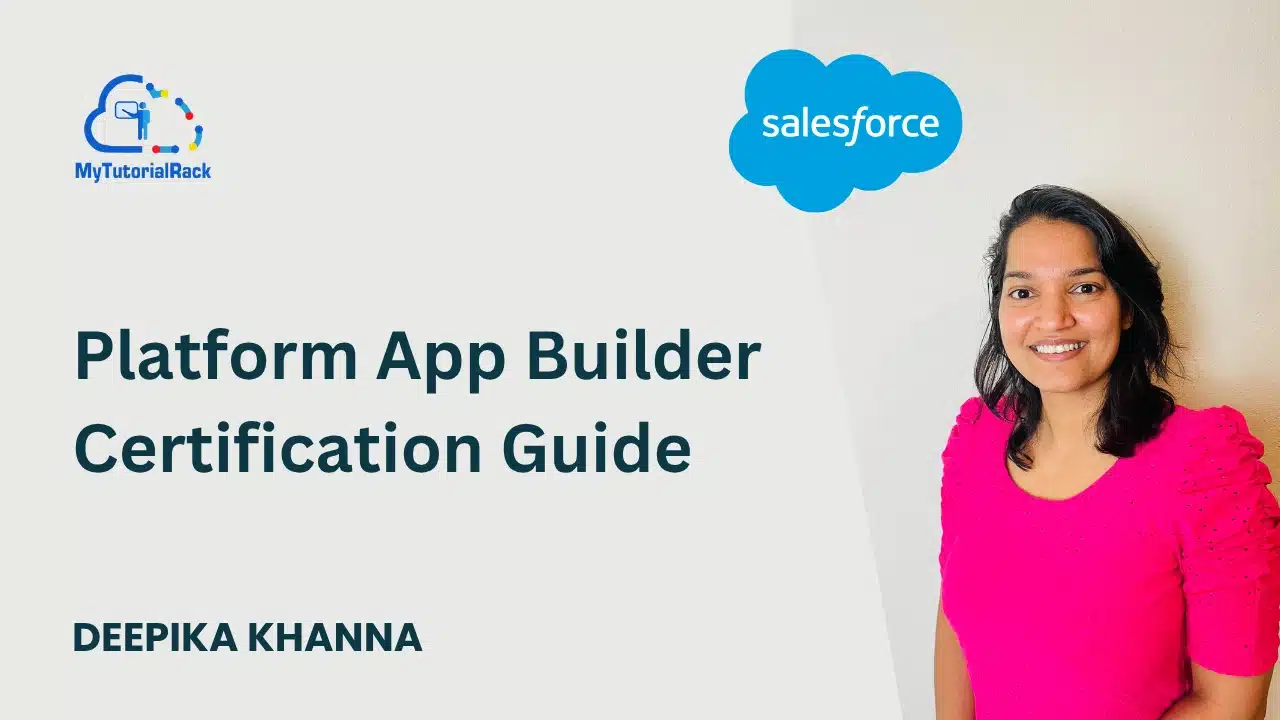
If you’ve ever thought you needed strong coding skills to build applications on Salesforce, it’s time to rethink that assumption. This platform app builder certification guide will show you how professionals are building powerful, scalable apps using clicks—not code.
For beginners and intermediate Salesforce professionals, the Platform App Builder certification is one of the most practical and career-boosting credentials you can earn. It validates your ability to design, build, and deploy custom applications using Salesforce’s declarative tools.
But here’s the challenge:
Many candidates underestimate the depth of the exam, go in unprepared, and fail on their first attempt.
This guide solves that problem. It breaks down everything you need—from exam structure and key concepts to real-world insights and preparation strategies—so you can approach the certification with clarity and confidence.
What Is the Platform App Builder Certification?
The Salesforce Platform App Builder certification is designed for professionals who want to demonstrate their ability to build custom applications on the Salesforce platform using declarative features.
Who Should Take This Certification?
This certification is ideal for:
- Salesforce Administrators looking to advance their skills
- Business analysts working on Salesforce implementations
- Developers transitioning into low-code/no-code solutions
- Freshers aiming to enter the Salesforce ecosystem
What Skills Does It Validate?
At its core, this certification proves your ability to:
- Design data models using objects and relationships
- Build user interfaces with Lightning App Builder
- Automate business processes using Flow and Process Builder
- Implement security and access controls
- Create reports and dashboards
In simple terms, it shows that you can turn business requirements into working Salesforce applications—without heavy coding.
Why This Certification Matters in 2026
The demand for low-code and no-code platforms is growing rapidly. Organizations want faster development cycles, reduced costs, and scalable systems—and Salesforce delivers exactly that.
Industry Trends Driving Demand
- Businesses are prioritizing rapid digital transformation
- Companies want configurable solutions instead of custom code
- Salesforce adoption is expanding across industries like healthcare, finance, and hospitality
Career Benefits
Earning this certification can help you:
Platform App Builder Certification Guide: Exam Overview
Understanding the exam structure is critical for success.
Exam Details
- Format: Multiple-choice and multiple-select
- Duration: ~105 minutes
- Number of Questions: ~60
- Passing Score: Around 63%
- Cost: Standard Salesforce certification fee
Key Topics and Weightage
Here’s a simplified breakdown of the major sections:

1. Salesforce Fundamentals
- Multi-tenant architecture
- Declarative vs programmatic customization
- AppExchange basics
2. Data Modeling & Management
- Standard vs custom objects
- Schema builder
- Relationships:
- Data import tools
3. Business Logic & Process Automation
- Workflow Rules
- Process Builder (legacy but still tested)
- Flow (very important)
- Approval processes
4. User Interface
- Lightning App Builder
- Page layouts
- Dynamic forms
5. Security
6. Reporting & Analytics
- Report types
- Dashboards
- Data visualization
Key Concepts You Must Master
To pass the exam—and more importantly, to succeed in real-world projects—you need more than theory.
1. Data Modeling Is the Foundation
Many exam questions revolve around choosing the correct object relationship.
Example:
- Use Master-Detail when:
- You need roll-up summaries
- Child records depend on parent
- Use Lookup when:
- Relationships are optional
- Objects should remain independent
2. Flow Is the Future of Automation
Salesforce is actively moving toward Flow as the primary automation tool.
You should be comfortable with:
- Record-triggered flows
- Screen flows
- Decision elements
- Variables and loops
Pro Tip: If you’re confused between Workflow, Process Builder, and Flow—choose Flow in most modern scenarios.
3. Security Model Is Frequently Tested
Many candidates lose marks here.
Understand the hierarchy:
- Organization-wide defaults (OWD)
- Role hierarchy
- Sharing rules
- Profiles & permission sets
4. UI Customization Is Not Just Cosmetic
The exam tests how well you can design user-friendly applications.
Focus on:
- Lightning pages
- Component visibility
- Dynamic layouts
Step-by-Step Preparation Strategy
Here’s a structured approach to mastering this platform app builder certification guide.
Step 1: Build a Strong Foundation
Start with:
- Salesforce basics
- Navigation and UI
- Core CRM concepts
Step 2: Learn by Doing (Critical)
Don’t just read—practice everything.
Create a sample app like:
- Employee management system
- Inventory tracking app
- Case management system
Step 3: Focus on High-Weight Topics
Spend extra time on:
- Flow automation
- Data modeling
- Security
Step 4: Practice Scenario-Based Questions
The exam is not about memorization.
It tests your ability to answer questions like:
“What is the best solution for this business requirement?”
Step 5: Take Mock Exams
Mock tests help you:
- Identify weak areas
- Improve time management
- Get familiar with question patterns
Common Mistakes to Avoid
Even experienced professionals make these errors.
Mistake 1: Ignoring Flow
Many candidates still focus too much on Workflow Rules.
Reality: Flow dominates the exam.
Mistake 2: Memorizing Instead of Understanding
The exam is scenario-based.
You must understand why a solution works.
Mistake 3: Weak Security Knowledge
Security questions are tricky and conceptual.
Mistake 4: Skipping Hands-On Practice
Reading alone is not enough.
Real-World Applications of App Builder Skills
This certification isn’t just theoretical—it directly translates into real business value.
Example Use Cases
- Automating customer onboarding
- Building approval workflows for finance teams
- Designing CRM systems for sales teams
- Creating custom apps for inventory tracking
In industries like hospitality (which you’ve been exploring), this could mean:
- Personalizing guest experiences
- Automating loyalty programs
- Managing bookings and service requests
Future Trends: Why This Certification Is Future-Proof
The Salesforce ecosystem is evolving rapidly.
What’s Changing?
- Flow replacing legacy automation tools
- AI integration with Salesforce (Einstein AI)
- Increased focus on low-code development
What This Means for You
Professionals who understand declarative development will:
- Be more adaptable
- Deliver faster solutions
- Stay relevant in the job market
Final Thoughts
This platform app builder certification guide is more than just a roadmap to passing an exam—it’s a blueprint for building a successful Salesforce career.
If you approach it the right way—with hands-on practice, conceptual clarity, and strategic preparation—you won’t just pass the exam. You’ll gain skills that companies actively look for.
Ready to Take the Next Step?
If you’re serious about becoming job-ready and not just exam-ready, structured learning can make a huge difference.
A well-designed course can help you:
- Work on real-world Salesforce projects
- Gain hands-on experience with automation and app building
- Build job-ready skills that employers value
You can explore this here:
It’s a practical way to bridge the gap between theory and real-world implementation—especially if you’re aiming to land a Salesforce role quickly.
Your Next Move
Start building. Start practicing. And most importantly—start thinking like a problem solver, not just a learner.
That’s what truly sets a certified Platform App Builder apart.