Table of Contents
ToggleIntroduction: Why Salesforce Skills Are More Valuable Than Ever
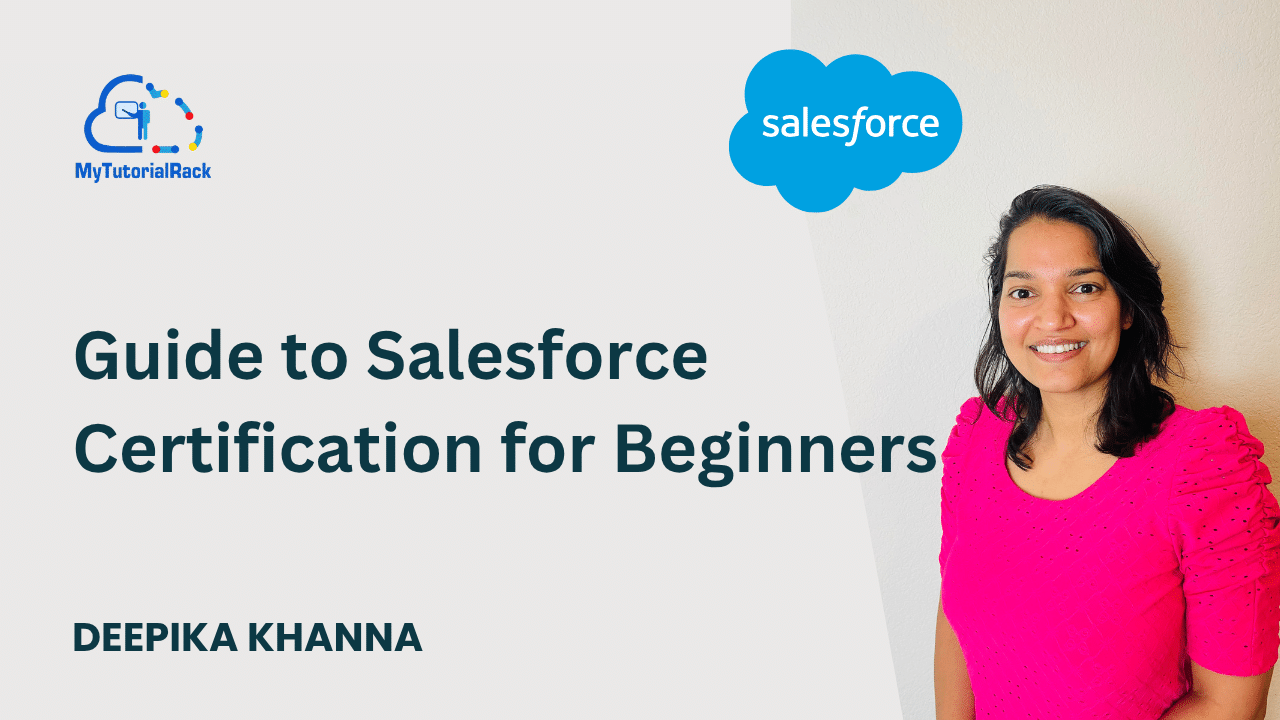
If you’ve been searching for a tech career that’s both accessible and in massive demand, Salesforce certification for beginners might be the smartest move you’ll make this year.
Here’s a striking data point: according to research by IDC, the Salesforce ecosystem is projected to generate over 9.3 million new jobs by 2026. And nearly half a million job postings at any given time list Salesforce experience as a requirement. That’s not a niche skill — that’s a mainstream career accelerator.
But here’s the challenge most beginners face: where do you even start? The Salesforce certification landscape can feel overwhelming at first glance. There are dozens of credentials, multiple tracks, and no shortage of conflicting advice online.
This guide cuts through the noise. Whether you’re a fresh graduate, a career switcher, or someone who just started using Salesforce at work, you’ll walk away knowing exactly which certification to pursue first, how to prepare, and how to position yourself for a job-ready career.
What Is Salesforce, and Why Does Certification Matter?
Before diving into exam details, let’s set the stage.
Salesforce is the world’s leading Customer Relationship Management (CRM) platform. Businesses use it to manage sales pipelines, customer service, marketing automation, and more — all from one unified platform. As companies increasingly digitize their operations, Salesforce professionals have become indispensable.
A Salesforce certification validates that you have real, measurable skills on the platform — not just theoretical knowledge. Employers treat certified professionals as a lower hiring risk, which directly translates into better job prospects and higher starting salaries.
For beginners, certification also provides a structured learning path. Rather than aimlessly watching YouTube tutorials, you’re working toward a defined, industry-recognized goal.
The Salesforce Certification Landscape: A Beginner's Overview
Salesforce organizes its credentials into tiers and role-based tracks. Here’s a simplified breakdown to help you navigate it:
Associate-Level Certifications (Start Here)
These entry-level credentials are specifically designed for people with 0–6 months of Salesforce experience. They require no prior technical expertise and are shorter in format than professional-level exams.
There are currently three Associate certifications:

- Salesforce Associate — Validates foundational knowledge of reporting, user administration, data management, and platform customization. Best for anyone who has used Salesforce in any capacity.
- AI Associate — Covers foundational AI concepts, responsible data handling, and how artificial intelligence integrates with the Salesforce CRM ecosystem. Great for those curious about AI’s growing role in business technology.
- Marketing Associate — Focuses on Marketing Cloud Engagement, marketing fundamentals, compliance, and campaign metrics. Perfect entry point for aspiring marketers.
Each associate exam is 40 questions with a 70-minute time limit — significantly more manageable than upper-level exams.
Professional-Level Certifications (Your Next Step)
Once you’ve built your foundation, the professional tier is where careers are truly made. The most popular credential in this tier — and one of the most sought-after in the entire Salesforce ecosystem — is the Salesforce Certified Administrator (commonly called “Salesforce Admin”).
This certification proves you can configure and maintain a Salesforce environment, manage users and data, build automation, and help a business get the most out of the platform. It’s widely regarded as the gold standard first professional certification for anyone pursuing a Salesforce career.
Why the Salesforce Admin Certification Is the Best First Step for Most Beginners
If you’re serious about building a career in the Salesforce ecosystem, the Salesforce Certified Administrator exam deserves your full attention after completing an associate-level credential.
Here’s why it consistently tops the list for career-focused beginners:
- High demand: Admin roles are some of the most consistently posted Salesforce positions across all industries.
- No coding required: The Admin exam focuses on declarative (point-and-click) configuration, not programming. This makes it accessible to non-developers.
- Versatile foundation: An Admin certification opens doors to consultant, business analyst, and even developer tracks down the road.
- Competitive salary: Certified Salesforce Admins command competitive salaries even at the entry level, with significant growth potential.
Salesforce Admins are the people within organizations who keep the platform running smoothly — they work with stakeholders, define business requirements, customize Salesforce environments, and empower users. It’s a role that blends technical skill with business communication, making it perfect for people who enjoy problem-solving and collaboration.
How Associate Certifications Differ from Professional Ones
Understanding this distinction helps beginners set realistic expectations and plan their certification journey more strategically.
| Feature | Associate Certifications | Professional Certifications |
|---|---|---|
| Experience Required | 0–6 months | Extensive hands-on experience |
| Exam Length | 40 questions / 70 minutes | 60–65 questions / 105 minutes |
| Maintenance Exams | No | Yes (annual updates required) |
| Career Stage | Starting out | Actively working in a Salesforce role |
| Focus | Foundational knowledge | Role-specific depth and application |
One particularly valuable aspect of the associate track: because there are no maintenance exams required, you can earn the credential and keep it without the ongoing commitment of professional-level re-certification. This makes it a low-risk, high-reward starting point.
Step-by-Step: How to Prepare for Your First Salesforce Certification
Getting certified doesn’t require a computer science degree or expensive bootcamps. Here’s a practical preparation roadmap for beginners:
Step 1: Choose Your Certification
For most beginners, start with the Salesforce Associate certification. If you have a specific interest in AI or marketing, the AI Associate or Marketing Associate are excellent alternatives. Once you pass your associate credential, set your sights on the Salesforce Admin certification as your next milestone.
Step 2: Use Trailhead — Salesforce's Free Learning Platform
Trailhead (trailhead.salesforce.com) is Salesforce’s official, free, gamified learning platform. It offers:
- Guided learning paths (“Trails”) aligned to specific certifications
- Hands-on challenges in a real Salesforce environment (no setup required)
- Expert-curated Trailmixes (curated collections of modules)
- A supportive global community of learners called Trailblazers
The Salesforce Associate exam has a dedicated Trailhead module — Cert Prep: Salesforce Certified Associate — that walks you through every exam topic with interactive content and flashcards.
Step 3: Review the Official Exam Guide
Each Salesforce certification has a publicly available exam guide outlining the exact topics covered and their relative weights on the exam. Download the guide for your target certification and use it as your study checklist.
Step 4: Join the Trailblazer Community
The Certification Exam Resources Trailblazer Community Group is a goldmine of study tips, practice questions, and peer support from people who’ve recently passed the same exams. Don’t skip this step — community learning is a massive advantage.
Step 5: Practice in a Real Salesforce Environment
Hands-on practice is non-negotiable. Trailhead gives you access to playground orgs (free sandbox Salesforce environments) where you can experiment with the platform without any risk. The more time you spend navigating the interface and completing hands-on challenges, the more confident you’ll feel on exam day.
Step 6: Schedule and Take Your Exam
When you feel ready, exams can be taken either at an authorized test center or online through a proctored environment. Register through the Trailhead Academy portal and give yourself a clear target date — having a deadline creates productive urgency.
Common Mistakes Beginners Make (And How to Avoid Them)
Even well-prepared candidates stumble. Watch out for these common pitfalls:
Skipping hands-on practice. Reading study notes isn’t enough. You need to actually click through Salesforce workflows — building reports, setting up automation, managing profiles — to internalize the concepts.
Ignoring the exam guide. Many beginners study broadly and miss highly-weighted topics. The exam guide tells you exactly where to focus your energy.
Waiting until they feel “100% ready.” Most successful candidates felt uncertain before taking the exam. A passing score doesn’t require perfection — it requires solid preparation and a willingness to attempt.
Jumping to advanced certifications too soon. The associate → administrator progression exists for a reason. Rushing to architect or developer certifications without foundational experience rarely leads to success.
Why This Matters Now: The Future of Salesforce Careers
The Salesforce ecosystem isn’t slowing down. With the rise of AI-powered features like Agentforce — Salesforce’s new generation of autonomous AI agents — the platform is rapidly evolving. This means professionals who invest in Salesforce skills today will be well-positioned to grow with the platform as it becomes even more deeply embedded in global business operations.
The addition of the AI Associate certification reflects just how central artificial intelligence has become to the CRM space. Whether you’re focused on administration, marketing, development, or consulting, understanding how AI intersects with Salesforce is quickly becoming a baseline expectation.
For beginners entering the field now, this is genuinely good news: you’re learning a platform at an inflection point, which means your skills will compound in value over time.
Conclusion: Your Salesforce Journey Starts with One Step
Getting your first Salesforce certification is less about passing an exam and more about committing to a career path that has proven, lasting demand. The entry point has never been more beginner-friendly — with free learning resources, supportive communities, and a clear progression from associate to professional credentials.
Start with the Salesforce Associate or AI Associate exam to build your foundation. Then work toward the Salesforce Administrator certification to make yourself genuinely job-ready in a high-demand field.
The only question is: when will you start?
Ready to Go from Beginner to Job-Ready? Take a Structured Approach.
Self-study works, but it can only take you so far — especially when you’re aiming for a credential that employers take seriously. If you want to learn Salesforce through real-world projects, hands-on practice, and structured guidance that mirrors what you’ll actually encounter in the workplace, a dedicated course makes all the difference.
Our Salesforce Admin certification course is built specifically for beginners and career switchers who want more than just theory. You’ll work through practical scenarios, configure real Salesforce environments, and graduate with the skills and confidence to pass your exam and perform from day one on the job.
If you’re serious about building a Salesforce career — not just collecting a certificate — this is your next step.